People, Data and AI - DAMA UK Midlands Region
Event report!
.png)
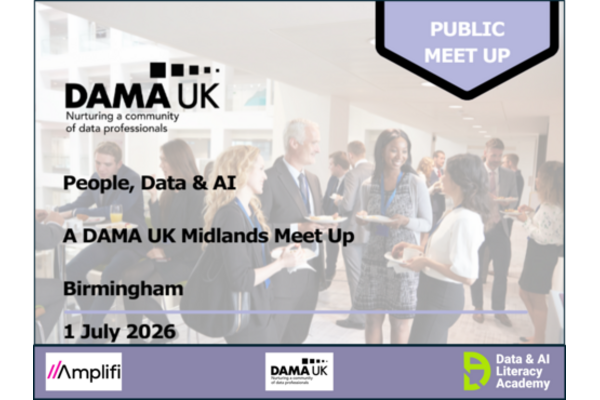

People, Data & AI: what happened when DAMA UK came to Birmingham
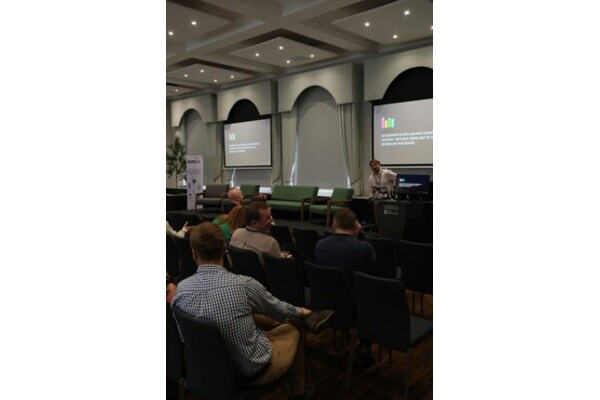
DAMA UK joined the Data & AI Literacy Academy and Amplifi at The Exchange in Birmingham for People, Data & AI, a deliberately small and discussion led day for data professionals across the Midlands and beyond.
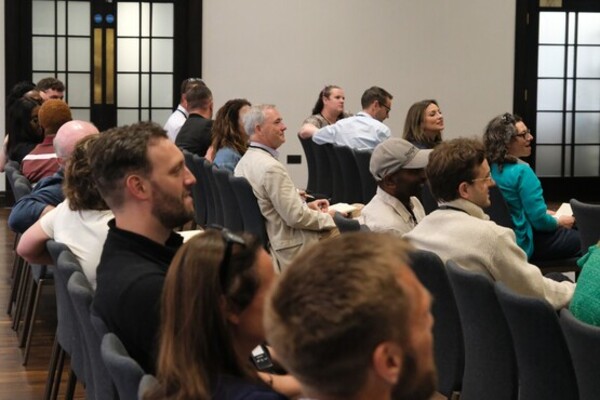
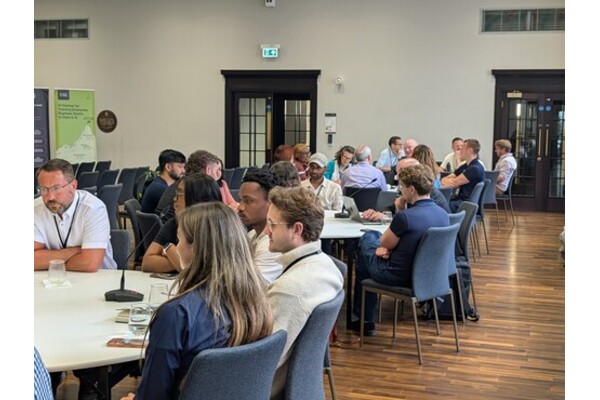
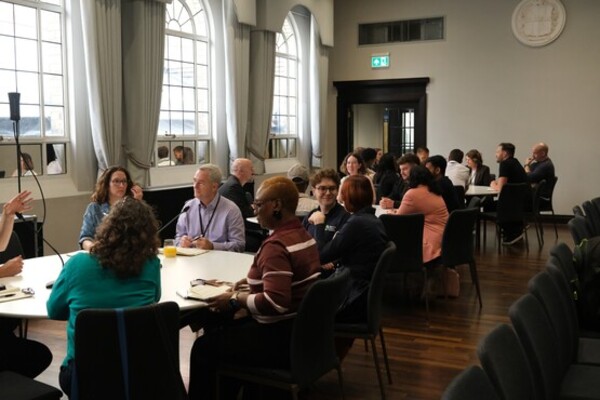
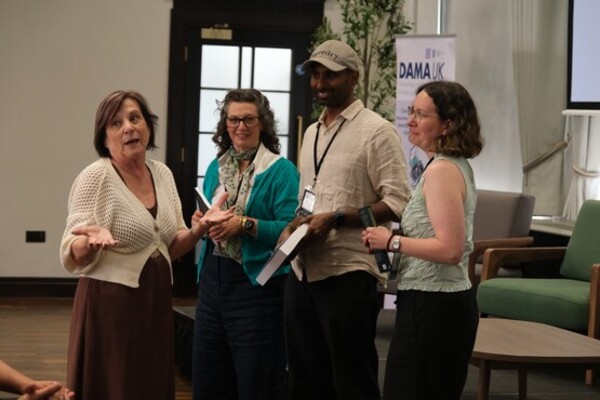
The format was the point. Rather than a stage and rows of seats, the day was built around keynotes that opened questions instead of closing them, a panel, and roundtables where every person in the room was expected to contribute. What followed was an unusually candid set of conversations about the problems data people actually face.
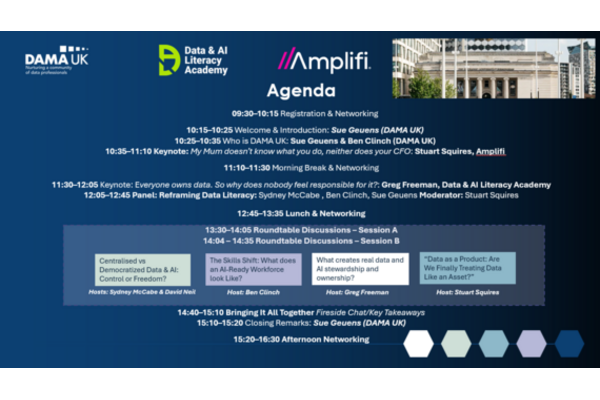
Sue Geuens, President of DAMA UK, opened the event, joined by Ben Clinch for an introduction to DAMA UK and what the community offers its members.
The keynotes
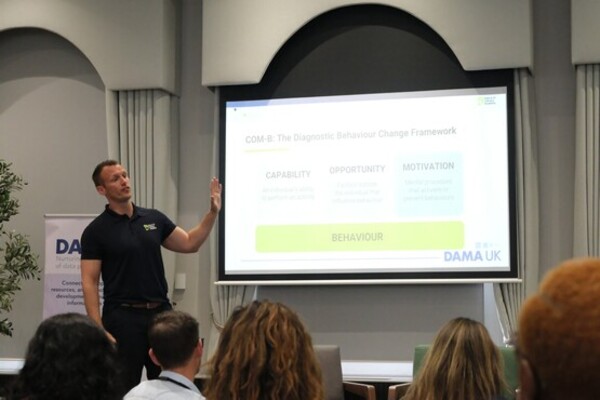
Stuart Squires of Amplifi opened with "My Mum doesn't know what you do, neither does your CFO". His case was straightforward. If we cannot explain governance, master data or AI in language that means something outside the data team, we should not be surprised when nothing moves and no budget appears. Reframing our work in business terms is not a presentational nicety, it is the difference between a strategy that gets funded and one that sits on a shelf.
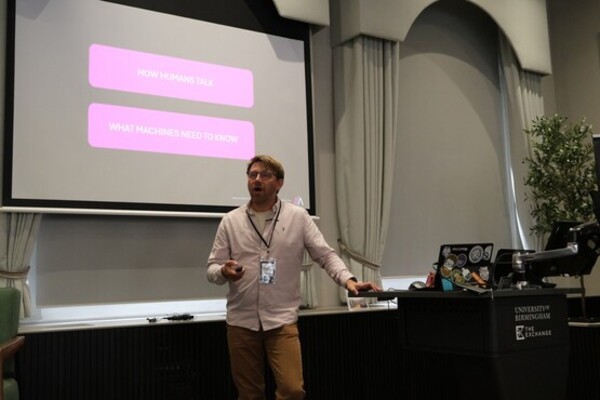
Greg Freeman of the Data & AI Literacy Academy followed with "Everyone owns data, so why does nobody feel responsible for it?", setting up the question of accountability that ran through the rest of the day.
The panel and round tables
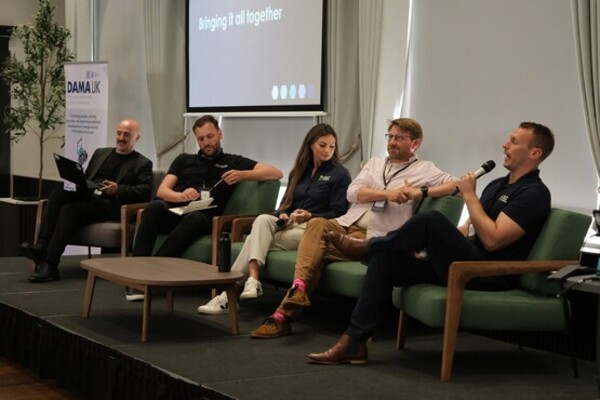
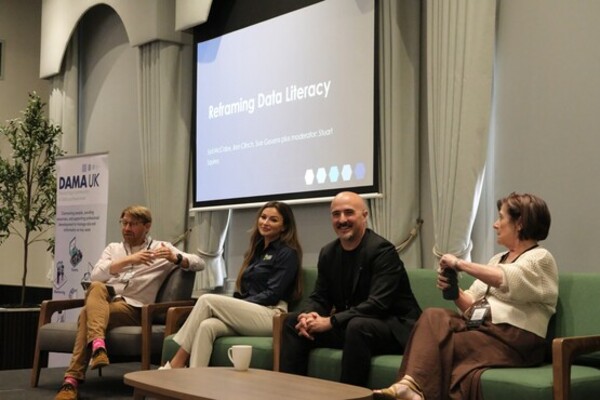
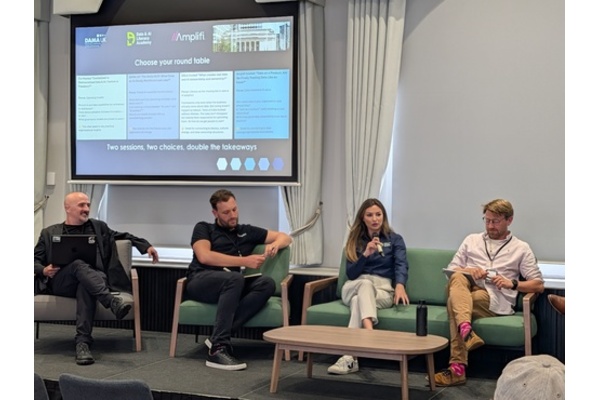
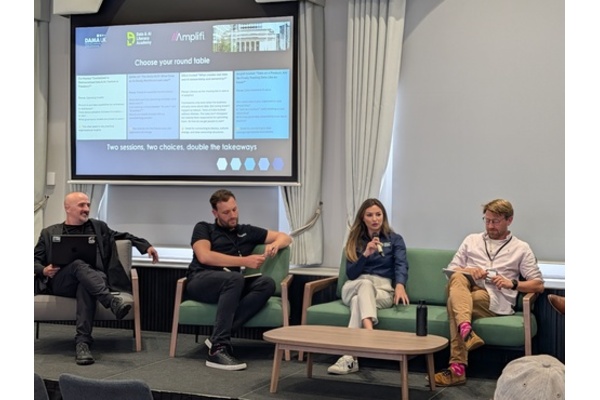
A panel on Reframing Data Literacy brought together Sydney McCabe, Sue Geuens and Ben Clinch, moderated by Stuart Squires. Four roundtables then ran across two afternoon sessions, covering centralised versus democratised data and AI, the skills shift and what an AI ready workforce looks like, stewardship and ownership, and whether we are finally treating data as a product.
Three themes that came through
Shared language is the foundation. Ask ten people in a room to define a data product and you will get several different answers, some meaning the database, some a report, some a tool built on a tool built on a tool. Without an agreed definition it is very difficult to agree who owns something, what good looks like, or whether value has been delivered. The room was clear that the underlying data sits beneath all of it, and that if the foundations are shaky, everything built above inherits the problem.
The skills picture is shifting rather than shrinking. Judgement, critical thinking, elicitation and the confidence to challenge an answer are all at a premium, while reporting and analytics roles are changing fastest as semantic layers make self service a reality. The concern raised most often was the entry level squeeze. If junior roles are the first to be automated, we risk removing the very place where people served their apprenticeship and built the judgement we now say we value most.
Willingness to experiment matters more than access to tools. Most organisations already have the tools. What many lack is the psychological safety for people to try something, get it wrong and learn from it quickly. Where trying and failing counts against you, people will not try, and the gap between those building with AI and those expected to use it widens. Hackathons and other low stakes formats came up repeatedly as a practical way through, alongside demonstrating value rather than talking about it.
Thank you
Our thanks to the Data & AI Literacy Academy and Amplifi for partnering with us, to Stuart Squires, Greg Freeman, Sydney McCabe and David Neil for leading the sessions, and above all to everyone who came and contributed so openly. Amplifi intend to run Stuart's keynote again as a webinar in the coming weeks.
DAMA UK runs events, webinars and community sessions across the UK throughout the year. If you would like to be part of the next one, or you would like to host or speak at an event in your region, we would be glad to hear from you.