.png)
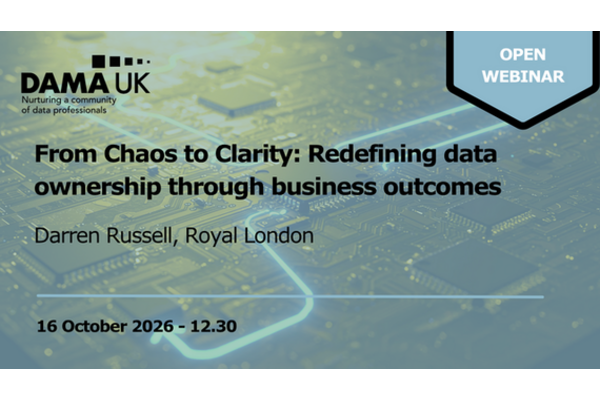
At Royal London, we’ve transformed the way data ownership is understood by linking it directly to business outcomes rather than systems or producers. This shift has created real accountability, clearer decision-making, and a stronger connection between data and value. In this fun and practical session, I’ll share how we built and embedded a new ownership model that works with existing business accountabilities instead of fighting against them. Expect real-world lessons, relatable stories, and a few laughs along the way as we unpack what truly makes ownership stick and what definitely doesn’t.
Key takeaways:
- How to align data ownership with business outcomes that matter.
- How to overcome resistance from teams who say “we just use the data.”
- How to turn governance from a checkbox exercise into a business enabler.

Darren Russell
Over the last decade, I’ve had the privilege of establishing data governance frameworks at both Tesco Bank and Royal London. Through those experiences, I’ve learned valuable lessons about what works, what doesn’t, and, most importantly, that there is no single blueprint for success. Effective data governance depends on understanding an organisation’s culture, listening to its people, and designing an approach that aligns with its unique goals and challenges.
Over the past two years, I have led the design, socialisation and implementation of Royal London’s new data governance framework. Built on collaboration and practical business engagement, the framework is designed to be both effective and sustainable, helping the organisation address current challenges while providing a foundation that can evolve alongside the business in the years ahead.
